
TMP Meaning in Text: A Complete Guide to Understanding and Using It
TMP Meaning in Text refers to Text Me Please.It is a short form used in texting.
People use it to ask for a message.
Many readers see TMP and feel confused.The word looks small but feels important.This makes people want to know its meaning.
TMP Meaning in Text appears in chats and messages.Friends use it in casual conversations.
It helps keep communication simple and fast.
What Does TMP Mean?
To clearly explain what does TMP mean, we need to start with its most common usage. The most popular TMP abbreviation meaning in casual communication is “Text Me Please.” This is also known as the TMP full form in texting, and it is widely recognized in American digital conversations. Simply put, TMP stands for text me please, which is a polite and informal way to ask someone to send a message later.
In daily conversations, the meaning of TMP in messages usually depends on timing and context. When someone is busy or unable to talk at the moment, they may say TMP to request a follow-up message. This is why TMP used in texting feels friendly rather than demanding. The TMP message meaning shows interest in continuing the conversation without pressure.
At the same time, TMP can also have another interpretation. In technical or computer-related discussions, TMP may refer to “temporary,” which is known as the TMP temporary meaning. This difference is important because the TMP meaning online can change depending on whether the conversation is casual or technical.
Read Also: What Does Ight Mean? Snapchat, Texting, and More
The Origins of TMP
The story behind TMP begins with the rise of mobile phones and early text messaging. In the United States, text messages once had strict character limits, which pushed users to create shortcuts. TMP became part of this trend, joining many common texting abbreviations that saved time and space. Over time, internet slang TMP grew popular because it was easy to remember and polite in tone.

As online communication expanded, TMP moved beyond simple texting. It became common in chats, games, and social media platforms. Today, TMP in texting and chat is widely understood, especially among younger users. This growth shows how modern text slang terms evolve and adapt to new communication styles. TMP is now one of many online messaging shortcuts that define today’s digital communication slang.
How TMP Is Used in Different Contexts
The TMP acronym explained becomes clearer when we look at how it is used across platforms. While the meaning stays similar, the tone and purpose can change depending on where it appears.
1. Texting
In everyday phone conversations, TMP used in texting usually appears when someone cannot reply right away. The TMP meaning in chat here is friendly and casual. For example, a person might say TMP to let the other person know they want to continue talking later. In American texting culture, this is seen as polite and respectful. This usage clearly reflects the chat slang TMP meaning, where speed and simplicity matter most.
2. Social Media
On social platforms like Instagram, Twitter, or Facebook, the TMP meaning on social media works in a similar way. People often comment or send short messages and ask others to follow up privately. This is why social media slang TMP is often used in direct messages or comments. Many users say TMP instead of writing a longer sentence. You may often see TMP used on Instagram when someone wants to move a public conversation into private chat.
3. Gaming
In online games and group chats, communication needs to be fast. This is where TMP used in gaming chat becomes useful. Gamers may say TMP when they are stepping away or need to coordinate later. The meaning stays the same, but the environment makes it more urgent. In this setting, TMP fits naturally with other short commands and phrases.
Common Misconceptions About TMP
One of the biggest misunderstandings about TMP is believing it always refers to files or systems. While the TMP temporary meaning is correct in technical contexts, it is not the most common usage in casual conversations. In texting and chatting, TMP almost always relates to messaging. Another misconception is that TMP sounds rude. In reality, many people ask, TMP polite or rude? The answer is simple: TMP is generally polite when used with friends or peers.
Understanding the context helps avoid confusion. When used properly, TMP sounds friendly and efficient, especially in casual American communication.
Similar Terms & Alternatives
TMP is not the only expression people use to ask for a message. There are several TMP alternative slang terms that carry similar meanings. The table below shows how TMP compares with popular alternatives used in the United States.
| Term | Meaning | Common Usage |
| TMP | Text Me Please | Casual texting and chat |
| HMU | Hit Me Up | Informal social media |
| DM | Direct Message | Social media platforms |
This comparison also highlights TMP vs HMU and TMP vs DM, showing that TMP is slightly more polite and direct than many alternatives.
How to Respond to TMP
Knowing how to respond to TMP becomes easy once you understand the TMP meaning in text and the situation in which it is used. Since TMP stands for text me please, the response usually shows agreement, timing, or interest in continuing the conversation. In casual texting, especially in the United States, a simple and friendly reply is enough. For example, if a friend sends TMP, replying with “Sure, I’ll text you later” fits naturally with the TMP meaning slang and keeps the tone relaxed. This type of response matches the TMP message meaning and shows that you understand the request.
In social media chats or gaming conversations, responses are often shorter because speed matters. A quick “Got it” or “Will do” works well and aligns with TMP used in texting and TMP meaning in chat. In these spaces, people rely on online messaging shortcuts, so long explanations are unnecessary. However, if the context is semi-formal, such as a workplace chat, your response should be clearer. For instance, saying “I’ll text you with the details shortly” respects the TMP abbreviation meaning while keeping communication professional. Overall, responding correctly means matching your tone to the platform, relationship, and purpose of the message.
Regional and Cultural Differences
The way TMP is understood and used can vary depending on region and culture. In the United States, TMP meaning in text is widely recognized because American texting culture favors speed and simplicity. Many people are familiar with internet slang TMP, making it easy to use without explanation. This is why TMP meaning online feels natural in American chats, texts, and social media interactions.
In other English-speaking regions, TMP may still be understood, but alternatives like HMU or DM might be more common. This highlights how digital communication slang shifts across cultures. In non-English-speaking countries, users may rely less on abbreviations like TMP and prefer full sentences instead. Even when TMP is seen, the meaning of TMP in messages might not be immediately clear to everyone. These differences show how modern text slang terms evolve based on local habits and language preferences. Understanding this helps avoid confusion when communicating with people from different backgrounds.
Is TMP Appropriate for Professional Communication?
When discussing TMP professional usage, context is extremely important. In most formal business settings, using TMP may seem too casual. Professional emails, client messages, or official documents usually require clear and complete language. In these cases, writing “Please text me when you are available” is more appropriate than relying on slang. This avoids confusion and maintains professionalism, especially for readers unfamiliar with chat slang TMP meaning.
However, in relaxed or modern workplaces, especially in internal chats or team messaging apps, TMP may be acceptable. Many U.S. companies encourage informal communication, and in these environments, TMP can fit naturally. Still, it is important to consider your audience. If there is any doubt, it is safer to avoid slang. Understanding whether TMP polite or rude depends on the setting helps you choose wisely. In short, TMP works best in casual digital conversations, while professional communication usually benefits from clearer wording.
TMP Meaning in Chat Conversations
The TMP meaning in chat is closely connected to how people communicate in real-time messaging apps. Chat conversations usually move fast, and users want quick ways to express ideas without typing full sentences. In this setting, TMP is understood as a polite request to continue the conversation later. The meaning of TMP in messages here shows interest rather than urgency. Many people use TMP when they are busy, distracted, or switching apps. This makes TMP a natural part of casual chat culture. It helps keep conversations open without pressure. This is why TMP fits well into everyday chat language.
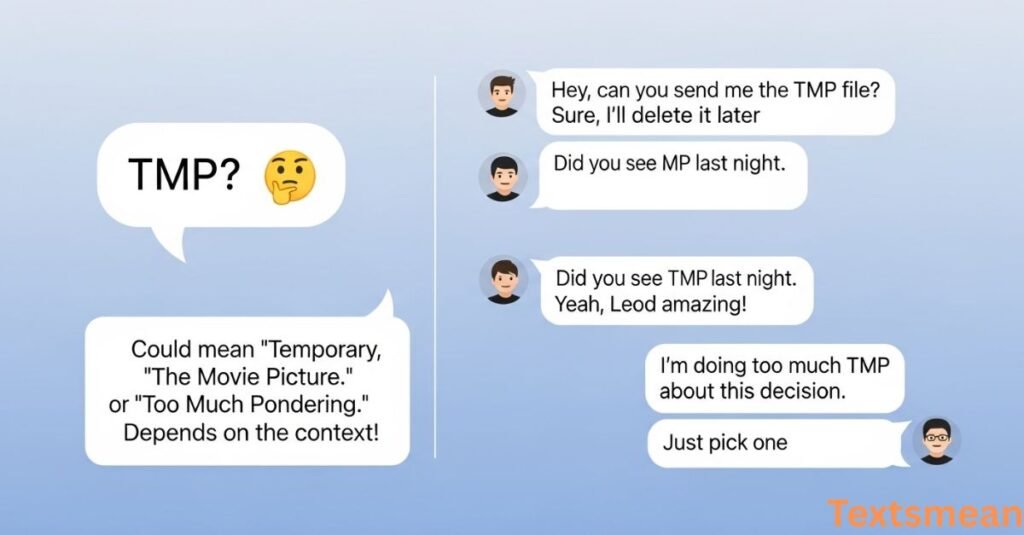
In group chats, the chat slang TMP meaning becomes even more useful. When multiple people are talking at once, TMP helps avoid long explanations. A short TMP message tells others that follow-up communication is welcome. This saves time and reduces confusion. Because chats often happen alongside work or entertainment, users depend on online messaging shortcuts like TMP. Over time, TMP has become familiar and easy to understand in chat spaces. Its simplicity makes it effective across different chat platforms.
TMP Meaning Online Across Platforms
The TMP meaning online can change slightly depending on where it is used. On social platforms, forums, and comment sections, TMP often suggests moving the conversation to private messages. This keeps public spaces clean and focused. Users rely on digital communication slang like TMP to guide interaction without sounding rude. Even though the wording is short, the intention is usually friendly. Understanding platform behavior helps users correctly read the tone behind TMP. Context always plays a key role.

Across different platforms, TMP keeps its core meaning but adapts to user habits. On fast-moving platforms, TMP works as a signal to pause and return later. In slower spaces like forums, it may mean private follow-up. This flexibility explains why TMP continues to appear online. As communication tools evolve, slang terms adjust with them. TMP survives because it remains useful. Its meaning stays clear even when the platform changes.
TMP Slang Explained for Beginners
For beginners, TMP slang explained simply means learning how short forms replace full sentences. TMP is not complicated once you understand its purpose. It is part of a group of modern text slang terms created to save time. New users often feel confused when they first see abbreviations like TMP. However, once the TMP text meaning is explained, it becomes easy to recognize. This learning process helps users feel more confident online. Slang like TMP helps conversations flow naturally.
Read Also: What Does “WYG” Mean in Text? Definition, Usage & More
Beginners should also understand that slang depends on context. TMP in casual chats means something very different from TMP in technical discussions. This is why learning internet slang TMP is important for everyday communication. Over time, users become comfortable recognizing these patterns. TMP becomes familiar through repeated exposure. With practice, beginners quickly learn when and how to use it. This makes digital communication less stressful.
TMP vs Other Common Texting Abbreviations
TMP is one of many common texting abbreviations used in daily communication. Unlike expressions that show emotion, TMP asks for action. This makes it different from words like LOL or OMG. The TMP abbreviation meaning focuses on follow-up communication. Because of this, TMP feels more direct but still polite. Comparing TMP with other abbreviations helps users understand its role. Each slang term serves a specific purpose.
When compared with other shortcuts, TMP stands out for clarity. It clearly communicates what the sender wants without confusion. This is why it remains relevant among newer slang terms. While some abbreviations fade over time, TMP continues to be useful. It adapts well to texting, chat, and social platforms. Understanding these differences helps users choose the right expression. This improves overall communication quality.
TMP Used in Texting and Chat Apps
The use of TMP in texting and chat apps is shaped by how people multitask. Many users reply while working, traveling, or relaxing. TMP allows them to delay a full response politely. This makes TMP a helpful tool in busy daily life. The TMP meaning in text here reflects convenience rather than avoidance. People use TMP to keep conversations alive. It signals interest even when time is limited.
Chat apps also encourage short replies, which increases TMP usage. In both private and group chats, TMP fits naturally. Users understand it without needing explanation. This shared understanding strengthens its popularity. As texting habits continue to evolve, TMP remains relevant. It works well with fast-paced communication styles. This explains why TMP is widely accepted in chat apps.
Is TMP Polite or Rude in Conversation?
Many people ask whether TMP polite or rude depends on tone and context. In most casual conversations, TMP is polite because it includes “please” in shortened form. Friends and peers usually see it as friendly. The TMP meaning slang suggests interest, not demand. Timing also affects how it is received. When used appropriately, TMP feels respectful and considerate.
However, TMP can sound rude if used without context. Sending TMP without prior conversation may confuse the reader. This is why understanding the relationship matters. With close contacts, TMP feels natural. With strangers, it may seem abrupt. Knowing when to use TMP helps avoid misunderstandings. Politeness depends on awareness and context.
Why TMP Remains Popular in Digital Communication
TMP remains popular because it solves a common communication problem. People want to stay connected without replying immediately. As part of digital communication slang, TMP offers a simple solution. It saves time while keeping conversations open. The TMP meaning online stays relevant because people value efficiency. This balance of politeness and speed keeps TMP useful. Language trends change, but practical terms survive.
Another reason for TMP’s popularity is familiarity. Many users have seen it repeatedly over time. This makes it easy to recognize and understand. TMP fits naturally into modern texting habits. It works across platforms and age groups. As communication becomes faster, shortcuts like TMP remain essential. This ensures TMP’s place in everyday digital language.
How TMP Is Used Across Social Media, Texting, and Gaming Platforms
TMP is commonly used across social media, texting, and gaming platforms as a shorthand to express specific phrases or ideas depending on context. On messaging apps like WhatsApp, Messenger, and iMessage, it appears in casual chats, allowing users to communicate quickly without typing lengthy sentences.
On platforms like Instagram, TikTok, and gaming communities, TMP is used in comments, replies, and captions to convey humor, surprise, or emphasis. Its meaning can vary based on the topic and audience. Understanding the context and tone is essential for interpreting TMP correctly, especially in fast-paced or group conversations.
Common Misunderstandings and Misinterpretations of TMP in Texting
A common misunderstanding of TMP is assuming it has a fixed meaning. Since TMP can represent different phrases in texting, gaming, or social media, users may misinterpret messages if the context is unclear, leading to confusion or awkward exchanges among friends or online communities.
Another issue is using TMP in professional or formal communication. Its casual and slang nature may appear inappropriate or confusing to others. To avoid misinterpretations, users should consider the audience and context, and provide additional explanation if needed to ensure their intended meaning is clearly understood.
FAQ’S:
What does TMP mean in texting?
TMP means Text Me Please, and it is used to politely ask someone to send a message later.
It is common in casual texting and friendly chats.
What does a tmp mean?
A tmp usually means Text Me Please in messages and online chats.
In technical contexts, it can also mean temporary, depending on usage.
What does TMB mean in text?
TMB means Text Me Back, asking the receiver to reply to a message.
It is informal and mostly used in casual conversations.
What does TM mean when texting?
TM means Text Me, a short and direct request to send a message.
It is often used between friends or close contacts.
What is TM in a text?
In texting, TM stands for Text Me and signals a request for communication.
In non-text contexts, TM may also refer to trademark.
Conclusion
Understanding TMP Meaning in Text helps readers communicate clearly in today’s digital world. People use short forms to save time and keep conversations smooth. TMP carries a polite and friendly tone that shows interest in staying connected. It fits well in texting, chatting, and online messages. When readers know the meaning, they feel more confident while reading or sending messages. Clear understanding also prevents confusion and improves communication.
The TMP Meaning in Text shows how language changes with technology. Short words now carry full ideas and clear intent. TMP works best in casual conversations with friends and peers. People should always think about the situation before using it. Formal settings need clear and complete sentences. This guide helps readers choose the right words at the right time. Strong communication creates respect and understanding. Simple knowledge like this improves modern digital conversations every day.