MIA Meaning in Text: The Ultimate Guide (With Memes & Examples)
MIA Meaning in Text stands for missing in action. People use it when someone stops replying to messages. It shows a short or unclear absence in chats.
You may see MIA in texts, group chats, or social media.It often appears when replies suddenly stop.This small word carries a clear message.
MIA Meaning in Text fits casual and online conversations.It appears in texting, gaming, and social apps.Knowing it helps you understand digital silence easily.
What Does MIA Mean? (Spoiler: It’s Not Just for Soldiers)
The MIA full form in text is missing in action. This phrase comes from military slang and was originally used to describe soldiers who did not return from battle. In official records, terms like POW MIA showed whether a soldier was captured or missing. Over time, the phrase moved from serious military use into casual language.
Today, the MIA slang meaning has changed. When people ask what does MIA mean in texting, they usually mean that someone has disappeared from chats or gone quiet without explanation. The MIA text meaning does not suggest danger. Instead, it describes a digital absence where a person has vanished, gone off the grid, or simply stopped replying. In casual chats, this tone often feels like playful teasing or a sarcastic absence rather than an accusation.
In modern usage, the MIA acronym texting style fits well with fast communication. People prefer short phrases, which is why MIA abbreviation chat and MIA short form appear often in messages, memes, and captions. According to MIA urban dictionary definitions, MIA usually means someone is quiet, ignoring messages, or taking a break without notice.
Read Also: TBD Meaning in Text: A Complete Guide (Latest Update 2026)
Real-Life Text Examples
The MIA meaning in messages becomes clear when you see how people actually use it. In friendly texting, someone may say that a friend went MIA after leaving them on read. In dating, it often appears after long gaps between replies, especially in Tinder ghosting situations. At work, MIA can sound more serious, especially when a teammate misses meetings or deadlines.
The table below shows how MIA in conversation changes tone based on context.
| Situation | Example Message | Meaning |
| Friends texting | “You’ve been MIA all weekend.” | Light teasing |
| Dating apps | “You went MIA after our last chat.” | Mild frustration |
| Group chats | “Why are you MIA in the group chat?” | Social absence |
| Work chat | “John is MIA today.” | Professional concern |
| Gaming | “He went MIA mid-match.” | Gameplay issue |
In all cases, the MIA chat slang suggests someone has fallen silent. It often replaces phrases like fell off, gone AWOL, or vanished, but with a softer and more playful tone.
From War Zones to WhatsApp: How MIA Went Viral
The journey of MIA from battlefields to smartphones shows how language evolves. In the early 1900s, missing in action slang carried heavy emotional weight. Families feared the worst when soldiers were listed as MIA. Decades later, internet forums adopted the term to describe users who stopped posting.
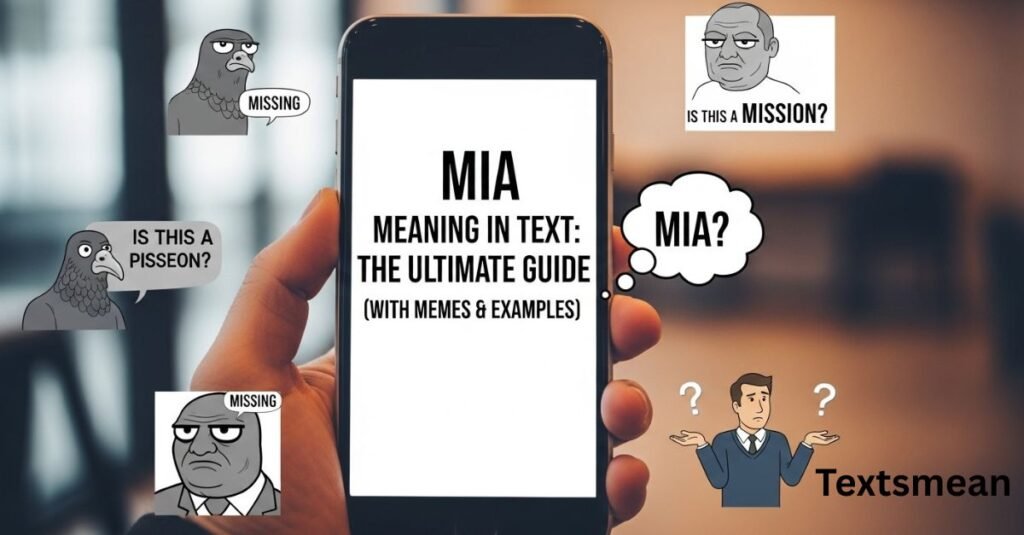
In the 2020s, social media transformed MIA into everyday slang. Platforms like TikTok popularized phrases such as motivation MIA or “my energy is MIA.” During lockdowns, many people described themselves as quarantine MIA due to isolation. This trend spread quickly through Gen Z slang and TikTok slang, making MIA part of casual speech across the U.S.
Now, the MIA meaning in text reflects modern habits where silence feels louder than words. People expect instant replies, so any delay can feel like someone has gone MIA meaning they intentionally withdrew.
MIA vs. Ghosting vs. AFK: What’s the Difference?
Many people confuse MIA with ghosting or AFK (away from keyboard), but these terms describe different behaviors. MIA usually suggests a short break or unclear reason. Ghosting means someone cut communication on purpose and never returned. AFK is common in gaming and indicates someone stepped away briefly.
The table below explains the difference clearly.
| Term | Meaning | Duration | Tone |
| MIA | temporary absence | Short to medium | Neutral or joking |
| Ghosting | Being ignored | Long-term | Negative |
| AFK | Away briefly | Very short | Technical |
Someone who is MIA feels chaotic neutral, while someone who ghosted shows intent. Understanding this difference helps avoid conflict and miscommunication.
How to Respond When Someone Calls You MIA
When someone calls you MIA, your response matters. Humor works well in casual settings. Flirty replies suit dating apps. Professional responses fit work chats. Americans often soften the situation with jokes or light explanations rather than apologies.
For example, playful responses show playful teasing, while polite replies work best in work MIA situations. Avoid giving the silent treatment, as it increases confusion. A simple explanation restores clarity and trust.
MIA Around the World (Not Everyone Uses It!)
The MIA meaning in text feels normal in the United States, but not everyone around the world uses it the same way. In the U.S., people treat MIA chat slang as casual and playful. Friends say someone went MIA when they become unresponsive or give radio silence for a short time. In other countries, the phrase missing in action still connects strongly to military slang and serious situations like POW MIA, so using it casually can feel uncomfortable.
In the United Kingdom, people often say someone has gone AWOL instead of using MIA. In gaming communities worldwide, players prefer technical words like AFK (away from keyboard) or disconnected. In some cultures, calling someone MIA may sound rude because it suggests they vanished or fell off the grid. This is why understanding culture and tone matters when using MIA in conversation, especially in global chats.
MIA in 2024: Why It’s Bigger Than Ever
In 2024, the MIA meaning in messages has become more popular because people live online more than ever. Remote jobs created new habits, and remote work slang like work MIA became common in emails and team chats. When someone misses meetings or replies late, coworkers often say they went MIA. Social media also plays a big role, as social media absence feels more noticeable now.
Platforms filled with Gen Z slang and TikTok slang helped spread phrases like motivation MIA, meaning someone feels tired or unmotivated. Dating culture added pressure too, especially with Tinder ghosting, where silence feels confusing. Compared to harsh words like ghosted, MIA sounds softer and more chaotic neutral. This balance explains why the MIA slang meaning continues to grow in daily texting.
When NOT to Use MIA
Even though the MIA text meaning feels light, there are times when you should avoid it. Do not use MIA in serious situations where someone is truly missing or in danger. In those cases, the term missing in action slang can sound insensitive. Avoid using MIA in formal writing, official emails, or legal documents, because slang reduces clarity.
You should also avoid MIA when someone feels hurt or ignored. Using it during friend ghosting moments may seem like blame. In emotional situations, clear words work better than slang. The MIA abbreviation chat works best for casual, short-term silence, not for long or serious issues. Choosing the right words helps keep communication respectful and clear.
MIA Meaning in Texting and Group Chats
The MIA meaning in text appears very often in personal chats and group messages. When someone suddenly stops replying, others may say that person has gone MIA. This usually means a short digital absence, not anger or dislike. In group chats, being MIA feels more noticeable because everyone expects quick replies.
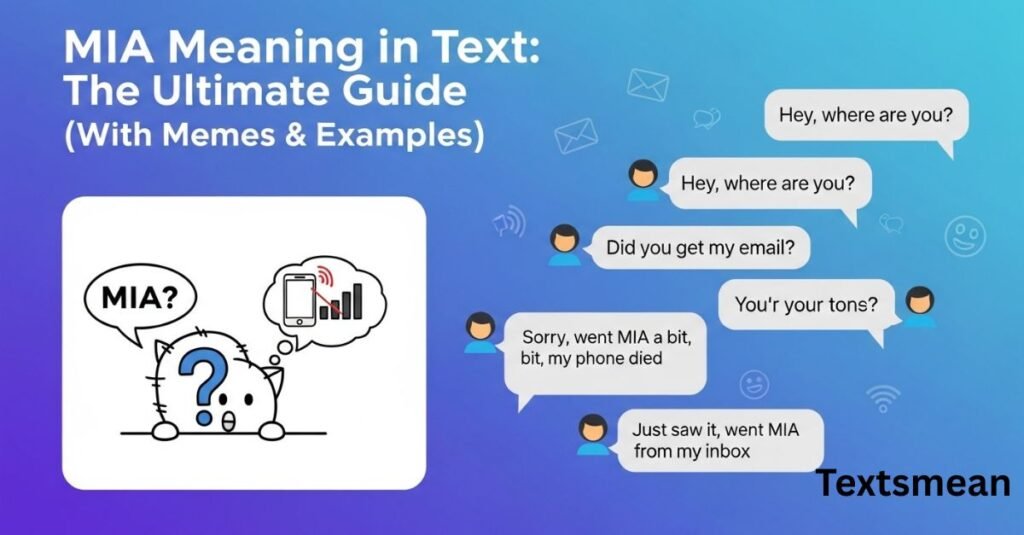
In the United States, people use MIA texting acronym in a light and friendly way. It replaces longer phrases like disappeared or off the grid. The term helps explain silence without starting conflict or blame.
MIA in Gaming Culture and Online Play
In gaming communities, the MIA slang meaning connects strongly with teamwork. When a player leaves mid-game, teammates say the player went MIA. This can happen due to internet issues, distractions, or real-life interruptions. In this case, MIA feels less emotional and more practical.
Gamers also use terms like gaming MIA or AFK (away from keyboard). While AFK suggests a short break, MIA suggests a longer or unexpected absence. Understanding this difference improves communication during online play.
MIA at Work: Professional vs Casual Use
The MIA meaning in messages changes in work environments. In casual team chats, coworkers may say someone is MIA when they miss updates or meetings. This usage fits modern remote work slang and hybrid offices in the U.S.
However, in formal emails, using MIA abbreviation chat may sound unprofessional. In these cases, words like unavailable or offline work better. Knowing when MIA fits the situation helps maintain respect and clarity at work.
Read Also: DWU Meaning in Text: Your Ultimate Guide to This Casual Acronym
MIA in Dating, Social Media, and Online Trends
In dating apps and social platforms, the MIA meaning in text often connects with silence after interest. When someone stops replying, people describe them as MIA instead of ghosted, which sounds harsher. This makes MIA feel more polite and less accusing.
On social media, creators say they were MIA when they stop posting. This use appears often in TikTok slang and modern online trends. It explains a break without sharing personal reasons, making it a safe and popular expression.
Psychology Behind Going MIA in Digital Life
The MIA meaning in text often connects to modern habits and emotions. People sometimes go MIA because they feel overwhelmed, tired, or need personal space. Constant notifications make silence feel noticeable, even when the absence is not intentional. This explains why digital silence feels stronger than real-life silence.
In many cases, going MIA does not mean rejection. It reflects a need for balance in online life. Understanding this idea helps reduce misunderstandings and keeps conversations respectful.
Is Going MIA Always a Bad Sign?
The MIA meaning in text does not always point to something negative. Many people go MIA because of work pressure, personal responsibilities, or the need for a short break from screens. In these cases, the MIA slang meaning reflects a temporary absence rather than rejection or anger. Life can get busy, and silence does not always carry a hidden message.
Problems only appear when someone stays MIA for a long time without explanation. Long radio silence may feel similar to ghosting, especially in dating or close friendships. Still, short digital gaps are common in modern life. Understanding this difference helps you stay calm and respond in a respectful way instead of assuming the worst.
How MIA Is Used Across Social Media Platforms and Chat Conversations
MIA is commonly used across social media platforms and chat conversations to describe someone who has disappeared or become inactive online. On apps like WhatsApp, Snapchat, and Messenger, people may say a friend is “MIA” when they stop replying or suddenly leave conversations for a while.
On Instagram, TikTok, and Twitter, MIA is often used in captions, comments, or memes to joke about being inactive or taking a break from social media. Its casual tone makes it popular in digital communication, especially among younger users who frequently interact online.
Common Misunderstandings and Misinterpretations of MIA in Texting
One common misunderstanding of MIA is assuming it always refers to something serious. While the term originally meant “Missing in Action,” in texting it is usually used casually to describe someone being absent or inactive for a short period of time.
Another issue is interpreting MIA as rude or negative when someone may simply be busy. Context matters because people often use the term humorously or lightly. Misunderstanding the tone can create unnecessary confusion or emotional reactions in conversations and online interactions.
When to Use MIA and When to Avoid It in Conversations
MIA is best used in casual conversations with friends, classmates, or online communities where slang is commonly understood. It works well when describing someone who has not responded recently or disappeared from chats, gaming sessions, or social media activity.
However, MIA should be avoided in professional or highly sensitive situations where the phrase may sound disrespectful or unclear. In formal communication, it is better to explain directly that someone is unavailable, inactive, or absent rather than relying on slang abbreviations.
Examples of MIA in Real Text Messages and Chats
MIA often appears in real text messages as a playful or casual expression. For example, someone might text, “You’ve been MIA all week,” to point out that a friend has not replied or participated in conversations recently.
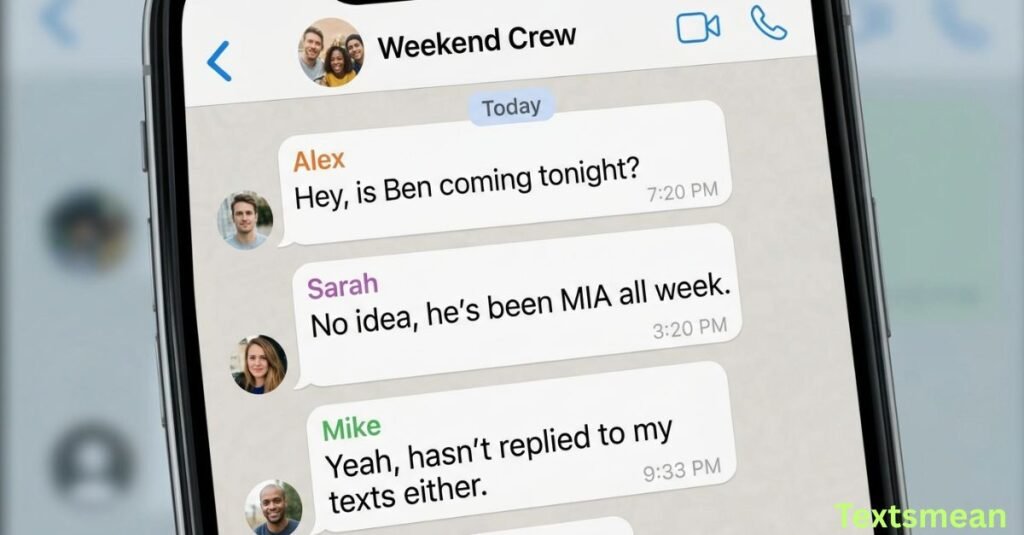
In group chats, MIA can also be used humorously when someone suddenly returns after being inactive. These examples show how the phrase fits naturally into online communication, helping users describe absence in a short and relatable way.
Why MIA Is Popular Among Gen Z and Online Communities
MIA is popular among Gen Z and online communities because it is short, expressive, and easy to understand in digital conversations. Younger users prefer slang terms that quickly communicate emotions or situations without needing long explanations in chats or posts.
Its popularity is also connected to meme culture and social media humor. People often joke about going “MIA” during stressful periods, busy schedules, or social media breaks. This relatable usage helps the term remain relevant across modern online communities and platforms.
How MIA Reflects Modern Digital Communication Trends
MIA reflects modern digital communication trends where abbreviations and slang simplify online interactions. Instead of lengthy explanations, users prefer short terms that quickly describe situations like inactivity, absence, or delayed replies in messaging apps and social platforms.
It also highlights how internet culture transforms older phrases into modern slang. While MIA originally had military origins, digital users adapted it into everyday communication. This evolution demonstrates how online communities constantly reshape language to match changing communication habits and lifestyles.
FAQ’S:
What does MIA mean in slang?
In slang, MIA means missing in action and describes someone who suddenly becomes quiet or unresponsive.
People use it to explain a short or unclear digital absence in chats or social situations.
What is MIA on social media?
On social media, MIA means someone stopped posting or replying for a while.
It explains a social media absence without sharing personal details.
What does MIA mean in love?
In love, MIA means a partner has gone silent or reduced communication.
It usually shows distance or confusion but not always intentional ghosting.
What does MIA mean in UK slang?
In UK slang, MIA still means missing in action, but people use it less casually.
Many prefer saying someone has gone AWOL instead.
What is the difference between MIA and AWOL?
MIA suggests an unclear or temporary absence.
AWOL implies leaving without permission or responsibility, especially in work or military settings.
What does MIA mean in relationships?
In relationships, MIA describes a partner who suddenly gives radio silence.
It often signals emotional distance but may only reflect a short break.
Conclusion
MIA Meaning in Text helps people explain silence in modern communication. The term comes from missing in action but now fits daily texting, social media, and online chats. People use it when someone stops replying for a short time. This meaning feels clear and simple. It helps avoid confusion and keeps conversations calm. MIA works well in friendly messages and casual online spaces. It also appears in gaming and group chats.
Understanding MIA Meaning in Text supports better communication. It helps readers know when silence means a short break and not rejection. This knowledge builds patience and respect in digital life. Clear understanding of common slang improves confidence while reading messages. Using words correctly strengthens trust and keeps conversations healthy and polite.