
HRU Meaning in Text: A Complete Guide for Chatting Online
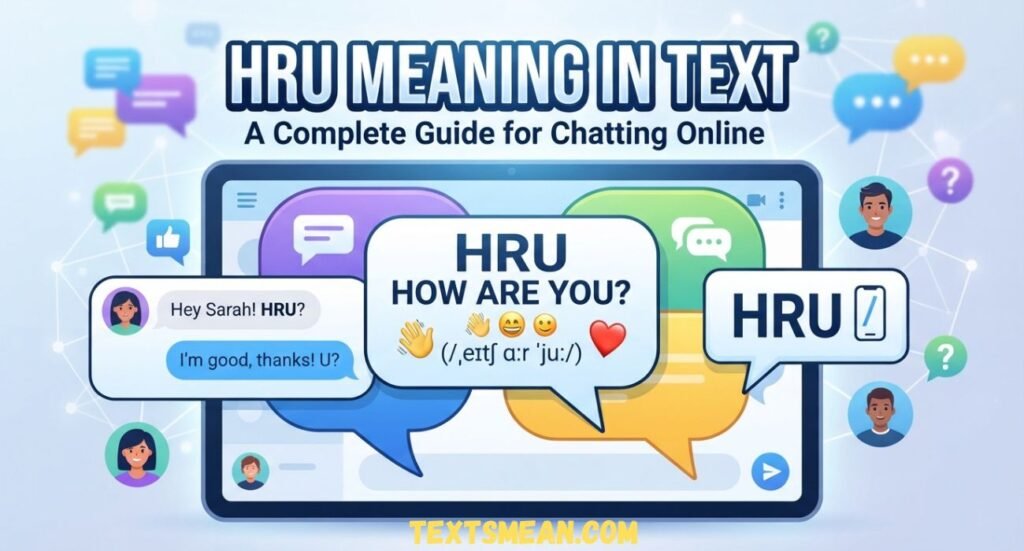
HRU means “How Are You” in texting. People use it to ask about someone’s day. It is a short and quick way to say hello.
Have you ever seen “HRU” in a text and felt confused? Many people wonder what it really means. This simple guide will clear it all up for you.
HRU is very common in casual chats and social media. Friends use it to check in on each other. It is easy to type and even easier to understand.
What Does HRU Mean in Text & Chat?
HRU is a texting abbreviation for “How Are You.” It’s a simple, friendly way to ask someone about their wellbeing without typing out the full phrase.
People use HRU as a quick check-in, usually right after saying hi. It’s casual, short, and works in almost any everyday conversation.
You’ll mostly see it in text messages, social media chats, and instant messaging apps. It fits right in with other texting shortcuts like LOL, BRB, and WYD.
Full Form, Stands For & Short Meaning of HRU
HRU stands for “How Are You.” Each letter represents one word in the phrase, minus the extra letters that aren’t needed to get the point across.

Here’s the quick breakdown:
- H = How
- R = Are
- U = You
It’s one of the simplest abbreviations out there because it just swaps “you” for the letter “U,” which sounds the same when you say it out loud. That’s the whole trick behind a lot of texting shorthand.
Origin, History & First Known Use of HRU
HRU came from the early days of SMS texting, when phones charged by the character or limited how many letters you could fit in one message. People needed shortcuts, so they started replacing whole words with single letters that sounded the same.
“You” became “U,” and that one swap alone helped create dozens of texting abbreviations, including HRU, RU (are you), and CU (see you). This habit carried over from early chat rooms and instant messengers in the late 1990s and early 2000s.
There’s no single person or date credited with inventing HRU. It grew naturally out of a texting culture that valued speed over spelling.
Once smartphones and social media took over, the abbreviation stuck around simply because it still works. It’s fast, familiar, and everyone already knows what it means.
Why People Use HRU
People use HRU because it’s fast. Typing three letters is quicker than typing out “how are you,” especially on a small phone keyboard.
It also feels casual and low-pressure. Sending HRU doesn’t require much thought, which makes it a comfortable way to start or continue a conversation.
Here are the main reasons people reach for HRU instead of the full phrase:
- It saves time and effort while typing.
- It matches the relaxed tone of texting and chatting.
- It signals genuine interest without sounding too formal.
- It’s easy to type on a phone, even with one hand.
Basically, HRU does the same job as “how are you” but fits better into fast-paced digital conversations.
Read Also: TM Meaning in Text: What It Really Means in Chats & Social Media
Where You’ll See HRU Most Often
HRU shows up most in casual, everyday communication. Think texting between friends, quick check-ins with family, or messages between coworkers who already know each other well.
You’ll also spot it in:
- Group chats
- Social media comments and DMs
- Gaming chat during multiplayer sessions
- Dating app conversations
- Online forums and community chats
It’s less common in formal writing, like emails to a boss or a business proposal. HRU belongs to informal spaces where people already talk in a relaxed, shorthand style.
HRU in Real-Life Chat Examples
Seeing HRU in context makes it easier to understand how natural it feels. Here are a few realistic examples:
Example 1 — Friends texting: Maya: hey! HRU? Jake: pretty good, just got off work. HRU?
Example 2 — Social media DM: Alex: omg it’s been so long, HRU been? Sam: I’ve been good! Busy with school lol
Example 3 — Gaming chat: Player1: yo HRU doing tonight Player2: tired but ready to play lol
Example 4 — Dating app: Chris: hey HRU today? Jordan: doing great, just relaxing. HRU?
These examples show how flexible HRU is. It works as an opener, a follow-up question, or a quick way to keep a conversation going.

Is HRU Rude or Polite?
HRU isn’t rude at all. It’s a friendly, casual way to check in on someone, and most people read it as polite in everyday texting.
That said, tone depends on context. In a very formal setting, like a professional email, using HRU instead of “how are you” might come across as too casual or careless.
In texting between friends, family, or casual acquaintances, HRU is completely normal and even expected. It shows you’re thinking about the other person without making a big deal out of it.
Is HRU Flirty?
HRU by itself isn’t flirty. It’s a neutral, friendly greeting that people use with friends, family, coworkers, and romantic interests alike.
The flirty vibe, if there is one, comes from the context and the relationship, not the abbreviation itself. Someone you’re interested in texting “HRU 😊” late at night carries a different tone than a coworker texting “HRU” during work hours.
So HRU can be part of a flirty conversation, but the letters themselves don’t carry any romantic meaning on their own.
How to Reply to HRU
Replying to HRU is simple. Most people give a short answer about how they’re doing, then ask the same question back.
Common replies include:
- “I’m good, HRU?”
- “Doing well, thanks! HRU?”
- “Not bad, just tired. HRU?”
- “Pretty good! You?”
You don’t need a long explanation unless you want to share more. A short, honest answer followed by the same question keeps the conversation flowing naturally.
When NOT to Use HRU
There are a few situations where HRU doesn’t fit well. Knowing when to skip it helps you avoid sounding careless or too casual.
Avoid using HRU in these cases:
- Professional emails or formal business messages
- First messages to someone you don’t know well in a serious context
- Job applications or interview follow-ups
- Messages meant to express deep concern, like checking on someone going through a hard time
In these situations, spelling out “How are you?” or asking something more specific shows more thought and care.
How People Use HRU in Daily Conversations
In daily texting, HRU usually shows up as a conversation starter or a quick follow-up. It’s often the first thing people type after saying “hey” or “hi.”
It also works well as a way to shift the conversation back to the other person. After talking about yourself for a bit, adding “HRU?” shows you’re interested in hearing about their day too.
Some people use it multiple times in one conversation, especially if time has passed. For example, texting “HRU today?” the next day after chatting the night before feels natural and doesn’t seem repetitive.
HRU Meaning Across WhatsApp, Instagram, TikTok & Snapchat
HRU means the same thing across every major platform: How Are You. But the way people use it can shift slightly depending on where they’re chatting.
- WhatsApp: Common in personal chats and group conversations.
- Instagram: Used in DMs or comments as a quick greeting.
- TikTok: Often appears in comments, captions, or casual messages.
- Snapchat: Popular for quick snaps, chats, and short replies.
No matter the app, the core meaning stays the same. Only the tone and pacing shift slightly based on the platform’s culture.
Different Meanings of HRU in Other Fields
While “How Are You” is by far the most common meaning, HRU can stand for other things in specific, non-texting contexts. These meanings are unrelated to chatting and usually depend on the field.
- In some academic or business contexts, HRU can refer to specific organization names or internal abbreviations that vary by company.
- In technical or scientific fields, HRU sometimes appears as an acronym for specialized terms unrelated to communication.
These alternate meanings are rare in everyday use. If you see HRU in a text message or social media chat, it almost always means “How Are You.”
Read Also: SFS Meaning in Text: What It Is, How It Works, and When to Use It
Common Confusions, Mistakes & Wrong Interpretations
A few mix-ups happen with HRU, especially for people newer to texting slang. Here are the most common ones:
- Confusing HRU with RU: RU means “Are You,” not “How Are You.” HRU adds the extra “H” for “How.”
- Mixing it up with HBU: HBU means “How About You,” which is used to redirect a question rather than start one.
- Overusing it in formal writing: Some people mistakenly use HRU in emails or professional messages, where it can come across as too informal.
- Reading too much into it: Since HRU is neutral, people sometimes assume hidden meaning or flirty intent when there isn’t any.
Understanding these small differences helps you use HRU correctly and avoid awkward mix-ups.
Similar Terms, Alternatives & Related Slang
HRU belongs to a bigger family of texting abbreviations that all serve a similar purpose: checking in on someone quickly. Here are some related terms you’ll likely run into:
| Abbreviation | Meaning |
| HBU | How About You |
| WBU | What About You |
| WYD | What You Doing |
| HYD | How You Doing |
| Sup / Wassup | What’s Up |
| BRB | Be Right Back |
| AFK | Away From Keyboard |
These terms often show up in the same conversations as HRU. For example, someone might text “HRU?” and later ask “WYD tonight?” in the same chat.
How to Reply When Someone Says HRU
When someone texts you HRU, the easiest response is a short update on how you’re feeling, followed by returning the question. This keeps the conversation balanced and shows you care about their answer too.
A few natural ways to respond:
- “I’m doing okay, just a long day. HRU?”
- “Great actually! HRU today?”
- “Been better honestly, but I’m hanging in there. HRU?”
If you want to keep the conversation going, you can add a small detail about your day. This gives the other person something to respond to, rather than leaving the chat feeling flat.
Is HRU Still Popular? Trends & Online Usage
HRU remains a widely used abbreviation, especially among younger texters and social media users. It hasn’t faded out the way some older slang terms have.
Part of its staying power comes from how simple and universally understood it is. Almost everyone who texts regularly recognizes HRU instantly, no explanation needed.
That said, some newer alternatives like “WYD” and “sup” have become just as popular for starting casual conversations. HRU still holds its place as a reliable, friendly go-to, especially when someone genuinely wants to know how another person is doing.
FAQ,S
What does HRU mean in text?
HRU means “How Are You?” It is a casual texting abbreviation used to ask how someone is doing.
What does it mean when a girl says “HRU”?
She is simply asking how you are. It can show friendliness or interest, but the meaning depends on the conversation.
Is HRU flirty?
Not usually. HRU is generally a casual and friendly phrase, although context can make it feel slightly flirty.
What does HRUU stand for?
HRUU usually means “How Are You?” with an extra U added for emphasis or a playful texting style.
What does “HRU” mean on WhatsApp?
On WhatsApp, HRU means “How Are You?” It is commonly used in casual chats instead of typing the full phrase.
Conclusion
Now you know the HRU Meaning in Text and how people use it every day. HRU stands for “How Are You,” and it works as a short, friendly way to check on someone. People use it in texts, chats, and social media messages because it saves time and feels natural. It fits into many situations, from talking with friends to chatting with family members. This small abbreviation carries a warm and caring tone, even though it uses very few letters.
Learning the HRU Meaning in Text helps you communicate better in daily conversations. You can now recognize it, reply to it, and use it with confidence. It shows care for others without needing long sentences. This simple term keeps conversations friendly, quick, and easy to follow.
Related Guides:
1: IMK Meaning: What It Really Means and How to Use It in Text
2: WYO Meaning in Text: What It Really Means and How to Use It
3: BFFR Meaning: What It Is, Where It Came From, and How to Use It
4:TS Full Form in Chat: What It Really Means and How to Use It
5: White Heart Meaning: What Does Really Mean in Text?